Packages starting from
$3000
Need help in choosing the right package for your medical trip?
Your Health data is protected with us
Transforming Lives with Laparoscopic Fibroidectomy
An Overview
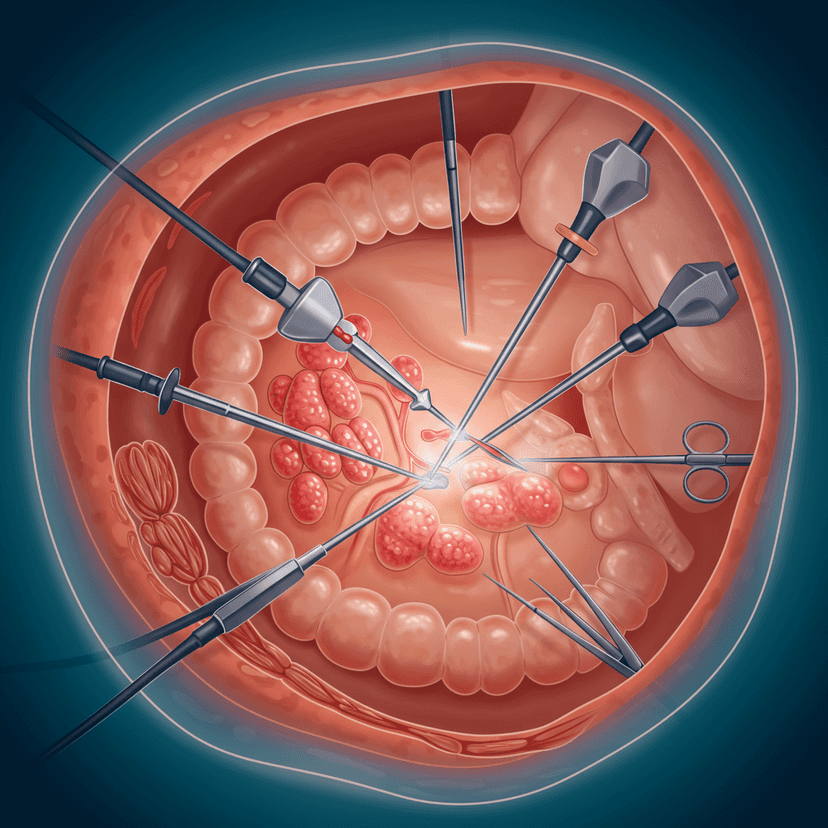
Laparoscopic surgery is a minimally invasive surgical technique used to diagnose and treat conditions within the abdomen and pelvis. It involves small incisions and the use of a laparoscope, a thin, flexible tube with a camera and light, allowing surgeons to see inside the body and perform procedures with precision. Laparoscopic surgery is commonly used to treat uterine myomas (fibroids) and bilateral polycystic ovaries.
Indications
Uterine Myoma (Fibroids):
- Non-cancerous growths in the uterus that can cause heavy menstrual bleeding, pelvic pain, and reproductive issues.
Procedure
- Preparation: Patients receive general anesthesia to ensure comfort during the surgery.
- Incision: Small incisions are made in the abdomen, typically near the navel.
- Insertion of Laparoscope: A laparoscope is inserted through one of the incisions, providing a magnified view of the internal organs on a monitor.
- Treatment of Uterine Myoma: The surgeon may remove the fibroids (myomectomy) or perform other necessary procedures to alleviate symptoms.
- Treatment of Polycystic Ovaries: The surgeon may perform ovarian drilling, a procedure where small holes are made in the ovary to restore normal ovulation.
- Closure: The incisions are closed with sutures or surgical glue, and a sterile dressing is applied.
Recovery
- Hospital Stay: Patients typically go home the same day or may stay overnight for observation.
- Pain Management: Medications are provided to manage any postoperative discomfort.
- Physical Activity: Patients are encouraged to avoid strenuous activities for a few weeks and follow specific postoperative instructions from their healthcare provider.
- Follow-up: Regular follow-up appointments are necessary to monitor recovery and address any concerns.
Positive Outcomes
Laparoscopic surgery for uterine myoma and bilateral polycystic ovaries offers several benefits, including smaller incisions, less postoperative pain, shorter hospital stays, and quicker recovery times compared to traditional open surgery. Most patients experience significant relief from symptoms and improved quality of life following the procedure.
4.0
94% Rated Value for Money
Why Choose us?

96%
Success Rate

0
Laparoscopic Fibroidectomy Surgeons

0
Laparoscopic Fibroidectomy

0
Hospitals Around the world

0
Lives touched
Overview
An Overview
Laparoscopic surgery is a minimally invasive surgical technique used to diagnose and treat conditions within the abdomen and pelvis. It involves small incisions and the use of a laparoscope, a thin, flexible tube with a camera and light, allowing surgeons to see inside the body and perform procedures with precision. Laparoscopic surgery is commonly used to treat uterine myomas (fibroids) and bilateral polycystic ovaries.
Indications
Uterine Myoma (Fibroids):
- Non-cancerous growths in the uterus that can cause heavy menstrual bleeding, pelvic pain, and reproductive issues.
Procedure
- Preparation: Patients receive general anesthesia to ensure comfort during the surgery.
- Incision: Small incisions are made in the abdomen, typically near the navel.
- Insertion of Laparoscope: A laparoscope is inserted through one of the incisions, providing a magnified view of the internal organs on a monitor.
- Treatment of Uterine Myoma: The surgeon may remove the fibroids (myomectomy) or perform other necessary procedures to alleviate symptoms.
- Treatment of Polycystic Ovaries: The surgeon may perform ovarian drilling, a procedure where small holes are made in the ovary to restore normal ovulation.
- Closure: The incisions are closed with sutures or surgical glue, and a sterile dressing is applied.
Recovery
- Hospital Stay: Patients typically go home the same day or may stay overnight for observation.
- Pain Management: Medications are provided to manage any postoperative discomfort.
- Physical Activity: Patients are encouraged to avoid strenuous activities for a few weeks and follow specific postoperative instructions from their healthcare provider.
- Follow-up: Regular follow-up appointments are necessary to monitor recovery and address any concerns.
Positive Outcomes
Laparoscopic surgery for uterine myoma and bilateral polycystic ovaries offers several benefits, including smaller incisions, less postoperative pain, shorter hospital stays, and quicker recovery times compared to traditional open surgery. Most patients experience significant relief from symptoms and improved quality of life following the procedure.