Packages starting from
$5000
Need help in choosing the right package for your medical trip?
Your Health data is protected with us
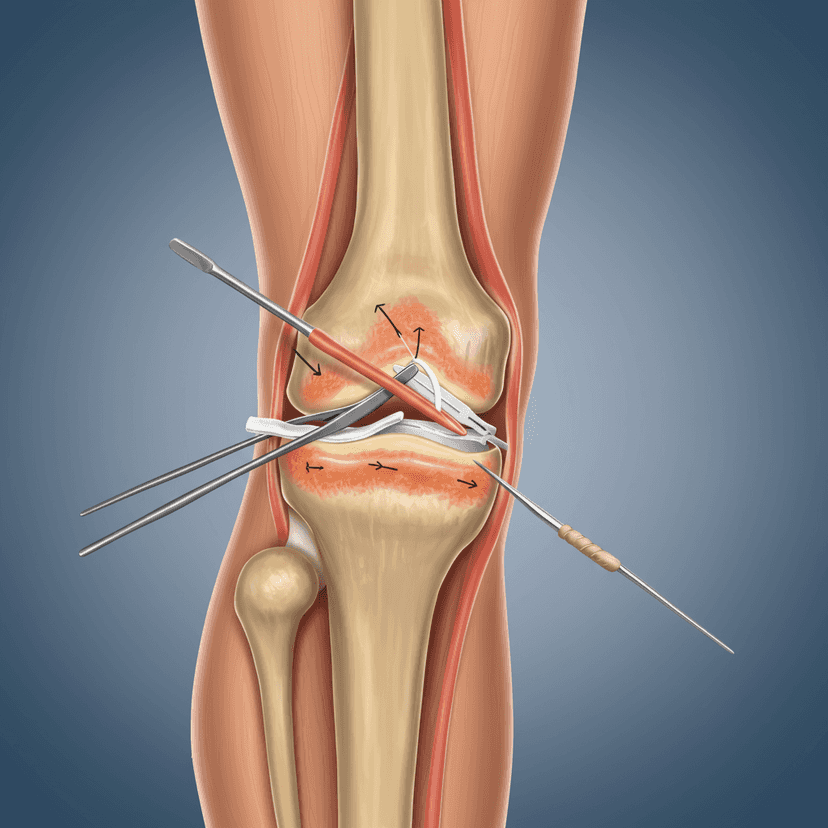
Transforming Lives with Arthroscopic ACL Reconstruction
Arthroscopic ACL Reconstruction is a minimally invasive surgical procedure used to repair a torn anterior cruciate ligament (ACL) in the knee. The ACL is one of the major ligaments critical for stable knee movement, and injuries to it can result from sports activities, accidents, or sudden movements that place too much stress on the knee.
Key Aspects of Arthroscopic ACL Reconstruction:
- Procedure: The surgery is performed using arthroscopy, which involves making small incisions around the knee to insert a camera and surgical instruments. The damaged ACL is removed, and a graft, typically taken from the patient’s own patellar tendon, hamstring tendon, or a donor, replaces it. The graft is then secured in place with screws or other fixation devices to hold it while the ligament heals into the bone.
- Advantages: Arthroscopic ACL reconstruction is favored because it typically results in less pain post-operation, reduced scarring, and a quicker recovery period compared to open surgery. The use of a camera allows for a more precise surgery with a detailed view of the knee’s interior.
- Recovery: Recovery involves initial rest and limited movement to protect the graft, followed by a rehabilitation program that includes physical therapy to regain strength and mobility. The total recovery can vary but usually spans several months, depending on the patient’s progress in physical therapy.
- Outcomes: Successful ACL reconstruction with proper rehabilitation typically allows individuals to return to their pre-injury levels of activity, including sports, although it may take 6 to 12 months before they can safely return to competitive sports.
Arthroscopic ACL Reconstruction is a sophisticated procedure that restores knee stability and function after an ACL injury, helping athletes and active individuals return to their normal activities with appropriate rehabilitation.
4.0
92% Rated Value for Money
Why Choose us?

97%
Success Rate

6+
Arthroscopic ACL Reconstruction Surgeons

0
Arthroscopic ACL Reconstruction

7+
Hospitals Around the world

1+
Lives touched
Overview
Arthroscopic ACL Reconstruction is a minimally invasive surgical procedure used to repair a torn anterior cruciate ligament (ACL) in the knee. The ACL is one of the major ligaments critical for stable knee movement, and injuries to it can result from sports activities, accidents, or sudden movements that place too much stress on the knee.
Key Aspects of Arthroscopic ACL Reconstruction:
- Procedure: The surgery is performed using arthroscopy, which involves making small incisions around the knee to insert a camera and surgical instruments. The damaged ACL is removed, and a graft, typically taken from the patient’s own patellar tendon, hamstring tendon, or a donor, replaces it. The graft is then secured in place with screws or other fixation devices to hold it while the ligament heals into the bone.
- Advantages: Arthroscopic ACL reconstruction is favored because it typically results in less pain post-operation, reduced scarring, and a quicker recovery period compared to open surgery. The use of a camera allows for a more precise surgery with a detailed view of the knee’s interior.
- Recovery: Recovery involves initial rest and limited movement to protect the graft, followed by a rehabilitation program that includes physical therapy to regain strength and mobility. The total recovery can vary but usually spans several months, depending on the patient’s progress in physical therapy.
- Outcomes: Successful ACL reconstruction with proper rehabilitation typically allows individuals to return to their pre-injury levels of activity, including sports, although it may take 6 to 12 months before they can safely return to competitive sports.
Arthroscopic ACL Reconstruction is a sophisticated procedure that restores knee stability and function after an ACL injury, helping athletes and active individuals return to their normal activities with appropriate rehabilitation.

Doctors

4.0
Consults at:


5.0
Consults at:

4.0
Consults at:

4.0
Consults at:

4.0
Consults at:

4.0
Consults at: